
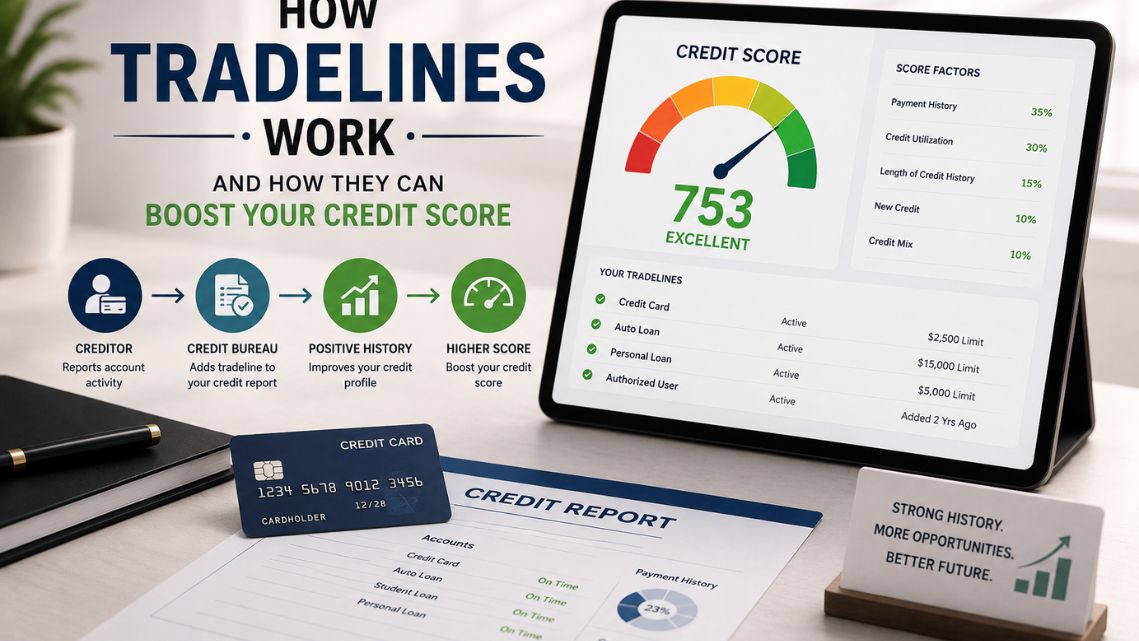
If you have heard the term “tradeline” but are not sure what it means or how it applies to your situation, you are in the right place. Understanding how tradelines work can unlock strategies that most people never learn when they are trying to improve their credit. Used correctly, tradelines can add strong positive history to your report and help you qualify for better interest rates, loans, and credit limits. This guide breaks down everything you need to know so you can make smart, informed decisions before taking any action.
What Is a Tradeline?
A tradeline is any credit account that appears on your credit report. Every credit card, auto loan, mortgage, student loan, and personal line of credit you have ever opened is a tradeline. Each one gets reported to one or more of the three major credit bureaus and contributes to your overall credit profile.
When most people talk about “using tradelines” as a strategy, they are specifically referring to authorized user tradelines or purchased tradelines. These are accounts where someone else’s credit card history is added to your report by granting you authorized user status on their account.
Our existing resource on tradelines is a great starting reference if you want a quick overview before going deeper.
How Tradelines Work: The Basics Every Borrower Should Know
To fully understand how tradelines work, you first need to know what information each account sends to the credit bureaus. Every reported tradeline includes:
- The account type (revolving, installment, or mortgage)
- The date the account was opened
- The credit limit or original loan amount
- The current balance and payment history
- The account status (open, closed, current, or delinquent)
Types of Tradelines That Affect Your Score
Not all tradelines carry the same weight. Here is how the main categories differ:
Revolving tradelines include credit cards and lines of credit. These directly affect your credit utilization ratio, which accounts for 30% of your FICO score. A revolving account with a high limit and a low balance has a strong positive pull on your score.
Installment tradelines include auto loans, personal loans, mortgages, and student loans. These demonstrate your ability to manage structured, long-term debt, which lenders see as a sign of financial responsibility.
Authorized user tradelines are accounts belonging to someone else where you have been added as an authorized user. When reported correctly, the full payment history and account details of that card can appear on your report, even if you have never personally made a payment on it.
Having a healthy mix of both revolving and installment tradelines in your profile signals to lenders that you are an experienced borrower. Our credit facts page covers more detail on how account mix factors into your overall score.
How Tradelines Work as an Authorized User
Being added as an authorized user is the most widely used tradeline strategy and one of the most accessible. Here is exactly how tradelines work in this scenario:
A primary account holder adds you to one of their credit card accounts as an authorized user. The card issuer then reports that account to the credit bureaus under both the primary holder’s name and yours. If the card has a long history of on-time payments, a high credit limit, and minimal balance, that entire positive profile now appears on your credit report and contributes to your score calculation.
You do not need to receive a physical card or make any purchases to benefit. The reporting itself is what matters. Many families use this method to help younger members, spouses, or recently divorced individuals build or rebuild their credit using an established account as a foundation.
One important distinction: being an authorized user is not the same as being a joint account holder. You carry no legal responsibility for the debt, and the primary holder’s account is not affected by your actions.
How Tradelines Work With Each Credit Bureau
How tradelines work can vary depending on which bureau receives the data. Not every creditor reports to all three bureaus, and a tradeline may appear on your Equifax report before it shows up on your Experian or TransUnion report, or not at all in some cases.
This is why it is critical to monitor each of your three credit reports separately rather than assuming they all reflect the same information. For a full breakdown of how each bureau operates and what they report, read our guide on the 3 major credit reporting agencies.
Score discrepancies between bureaus are common for this exact reason. Knowing this upfront helps you set realistic expectations when you add a tradeline and watch for its impact.
Who Benefits Most From Tradelines?
Tradelines produce the most significant results for people who fall into these categories:
- Thin credit file holders who have few accounts or a short credit history and need to fill out their report quickly
- People rebuilding after a financial setback who want to add positive history while older negative items are still present on their report
- New borrowers who want a stronger starting position before applying for a major loan or credit card
- Business owners who need strong personal credit to qualify for business financing
If you are exploring starting a business and need your personal credit to reflect more depth and history before applying for funding, a strategic authorized user tradeline can help bridge that gap.
Risks to Know Before Using Tradelines
Understanding how tradelines work also means being honest about where they can go wrong.
If the primary account holder misses a payment or maxes out the card after you have been added as an authorized user, that negative activity can appear on your report too. You have no control over the account, which means you are exposed to the primary holder’s financial behavior.
For purchased tradelines from third-party providers, accuracy is everything. Some services deliver accounts that are not properly verified, which can result in the tradeline being disputed by the bureau and removed. Our breakdown of Metro 2 compliance standards explains how tradelines should be reported to be considered valid and verifiable.
If you are dealing with collection agencies alongside your tradeline strategy, our guide on third-party agencies explains how to handle those accounts correctly at the same time.
The Consumer Financial Protection Bureau has published guidance on authorized user accounts and what consumers should look for: https://www.consumerfinance.gov/ask-cfpb/what-is-a-credit-report-en-309/
How to Use Tradelines Legally and Effectively
The authorized user strategy is legal. What the FTC focuses on is whether the accounts being reported are real, accurately documented, and legitimately reported to the bureaus. If you work with a tradeline service, confirm they use compliant reporting practices and can provide documentation for every account they add.
The FTC also offers guidance on what credit improvement strategies are legally sound and what to watch out for with third-party services: https://consumer.ftc.gov/articles/credit-repair-how-help-yourself
If any tradeline information ends up being reported inaccurately on your report, you have the legal right to dispute it. Our resource on what falls under the FCRA covers exactly how that process works and what your rights are at each step.
Also be careful about believing common misconceptions around tradelines before you start. Our guide on the 10 myths of credit repair clears up several tradeline myths that lead people to waste money or make avoidable mistakes.
Getting Professional Help With Your Tradeline Strategy
Tradelines are one tool in a complete credit improvement plan. They produce the best results when combined with active dispute resolution, debt management, and consistent on-time payment behavior. Using tradelines without addressing other issues on your report can produce limited or short-lived results.
At Credit Repair Champ, we help clients build full credit repair strategies that include tradeline guidance alongside dispute support and ongoing score monitoring. See what is available on our pricing page, or contact us directly to talk through your situation and what approach makes the most sense for your report.
Know someone else dealing with credit challenges? Our referral program lets you send them a resource while earning a reward for the introduction.
The Bottom Line
Understanding how tradelines work gives you access to a credit-building tool that most people are never taught about. With the right account, the right provider, and realistic expectations, tradelines can accelerate your credit improvement significantly. The key is going in with accurate information, a clear strategy, and a full picture of both the benefits and the risks. When you combine tradelines with everything else your credit profile needs, the results speak for themselves.