
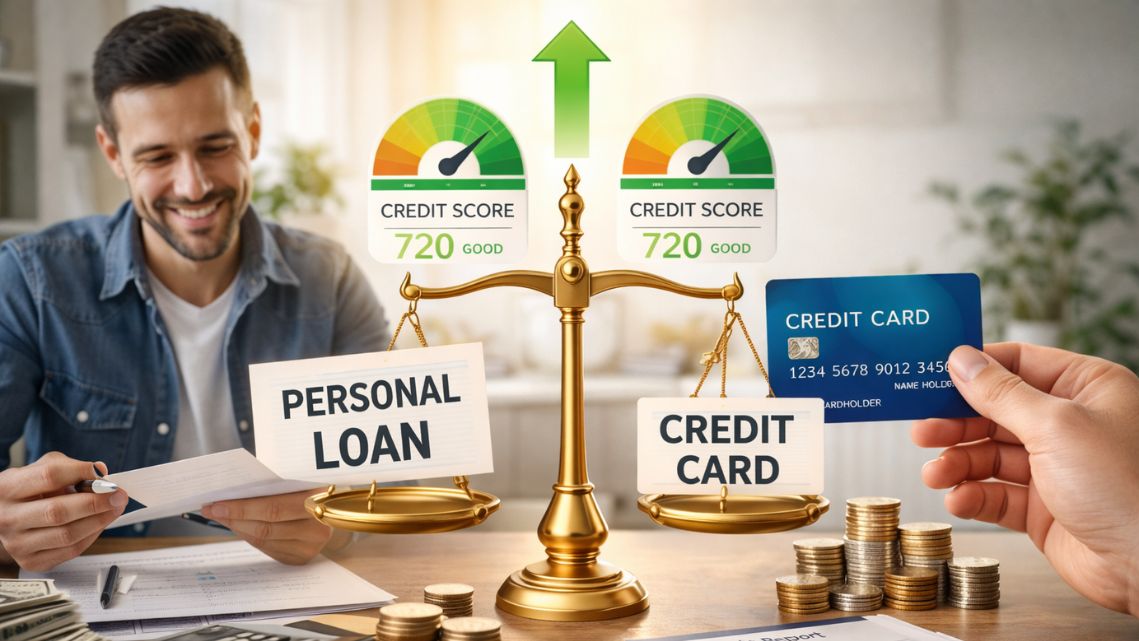
When trying to improve your credit score, many people ask the same question. Personal loan vs credit card which helps your credit more. The answer depends on how each account type affects major scoring factors like payment history, utilization, and credit mix.
Both options can improve your credit. Both can also damage it if mismanaged. Understanding how they work is the key to choosing the right strategy.
How Credit Cards Affect Your Credit Score
Credit cards are revolving accounts. This means your balance changes monthly and your credit limit directly impacts utilization.
Credit utilization is one of the most powerful credit scoring factors. It measures how much of your available credit you are using. Lower utilization generally results in higher scores.
If you keep balances low and pay on time, credit cards can improve your score quickly. However, high balances even if paid later can lower your score because statement balances are reported monthly.
Credit cards offer flexibility, but they require discipline.
How Personal Loans Affect Your Credit Score
Personal loans are installment accounts. You borrow a fixed amount and repay it over time in structured payments.
Unlike credit cards, personal loans do not affect utilization in the same way. Instead, they influence credit mix and payment history.
Having both installment and revolving accounts improves credit mix, which is a smaller but still meaningful scoring factor. On time payments on a personal loan build consistent positive history.
However, the loan balance itself does not have the same rapid scoring impact as lowering credit card utilization.
Key Differences That Matter
Here is a simple comparison.
| Factor | Personal Loan | Credit Card |
|---|---|---|
| Credit Type | Installment | Revolving |
| Utilization Impact | Minimal | High Impact |
| Credit Mix Benefit | Yes | Yes |
| Risk of High Balance Damage | Lower | Higher |
| Flexibility | Fixed payments | Flexible payments |
Credit cards can raise your score faster when managed correctly because utilization plays such a major role. Personal loans build steady positive history and diversify your credit profile.
Which One Helps More In Different Situations
If your main issue is high credit card utilization, paying down balances or spreading utilization across cards will likely help your score faster than opening a personal loan.
If your credit file lacks installment accounts, adding a personal loan may slightly improve your credit mix. This is more useful for long term strengthening rather than rapid score improvement.
If you are rebuilding credit after negative marks, consistent payments on either account type help. Payment history remains the most influential scoring factor.
When a Personal Loan Can Hurt Instead
Some people take out personal loans to pay off credit cards. This can help if it lowers utilization significantly. However, if you immediately run cards back up, you end up with both loan debt and high utilization. That harms your credit more.
Opening any new account also creates a hard inquiry and lowers your average account age slightly. These impacts are usually temporary but should be considered.
Strategy matters more than account type.
When a Credit Card Can Hurt Instead
Credit cards can damage scores quickly if balances climb above thirty percent of your limit. Even one month of high utilization can trigger a noticeable drop.
Missed payments on revolving accounts are reported rapidly and have serious consequences.
If you struggle with overspending, a fixed installment structure from a personal loan may reduce risk.
Final Answer
Personal loan vs credit card which helps your credit more depends entirely on your current credit profile.
- If your goal is fast score improvement, reducing credit card utilization usually has the strongest immediate effect.
- If your goal is long term stability and better credit mix, a personal loan with perfect payment history adds value.
- The most powerful strategy in 2026 is not choosing one blindly. It is understanding your credit weaknesses first, then selecting the tool that corrects the right factor.
- Strong credit is built through low utilization, consistent payments, controlled applications, and balanced account types.
- If you are unsure which direction supports your specific credit situation, analyzing your report before applying for anything is always the smarter move.